Physical Address
304 North Cardinal St.
Dorchester Center, MA 02124
Physical Address
304 North Cardinal St.
Dorchester Center, MA 02124

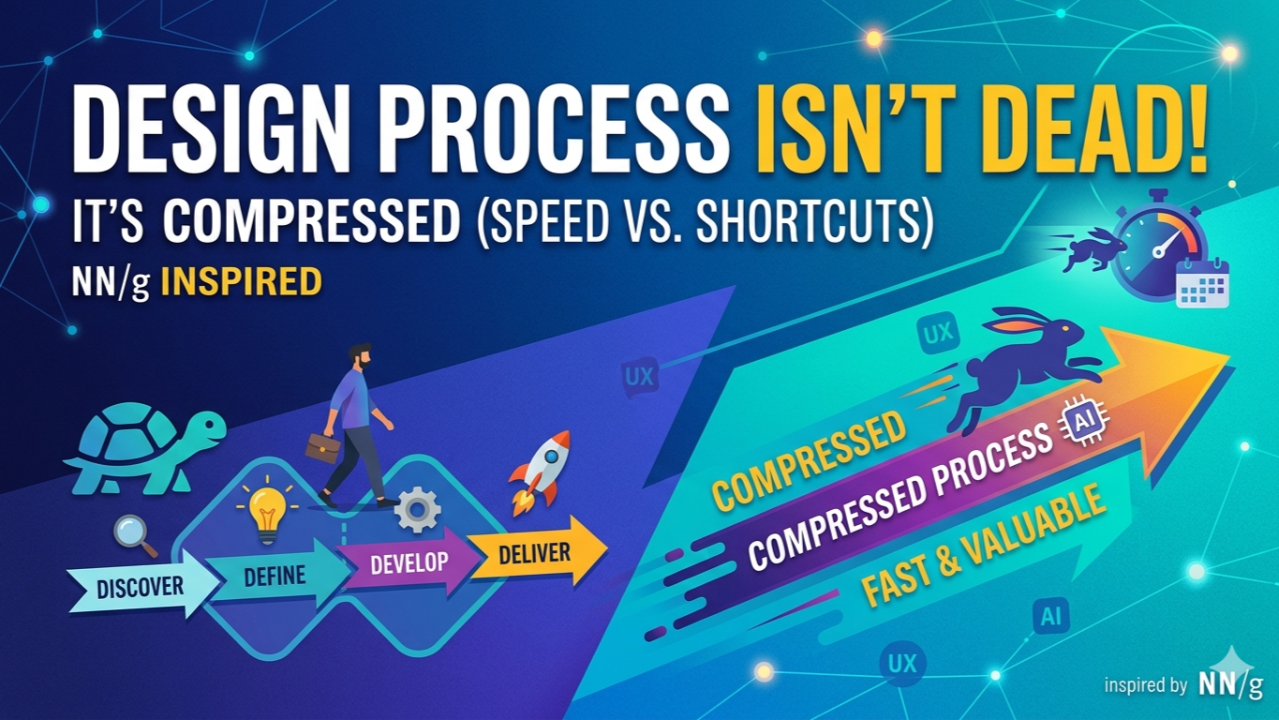
In 2026, the demand for speed in product development is higher than ever. With AI tools generating interfaces and data in seconds, many teams believe they can skip the traditional design process entirely. However, moving fast is not the same as skipping the work. The design process isn’t dying; it is simply becoming more efficient.
We often hear senior designers say they “just know” what will work, leading juniors to believe they can rely on “gut feeling” alone. This is a misunderstanding. What looks like a lucky guess is actually expert intuition, the result of years of practicing formal methods, conducting hundreds of user tests, and seeing many products fail.
Junior designers cannot skip the steps because they haven’t built that mental library yet. Without the foundation of a formal process, “intuition” is just a guess, and guessing is a high-risk strategy in product design.
The modern design process involves compression, not deletion. We still use frameworks like the Double Diamond, discovering, defining, developing, and delivering, but we do it faster.
Skipping the foundational work of UX creates significant business risks. When teams move straight to building without research or validation, they face:
To succeed today, you must be process literate. This means knowing which tools to use for the specific problem at hand.
The future of UX isn’t about following a rigid, slow checklist, nor is it about rushing to a final UI without thinking. It is about knowing how to apply design logic at the speed of the modern market. Process is your safety net; it ensures that even when we move fast, we are still moving in the right direction.